

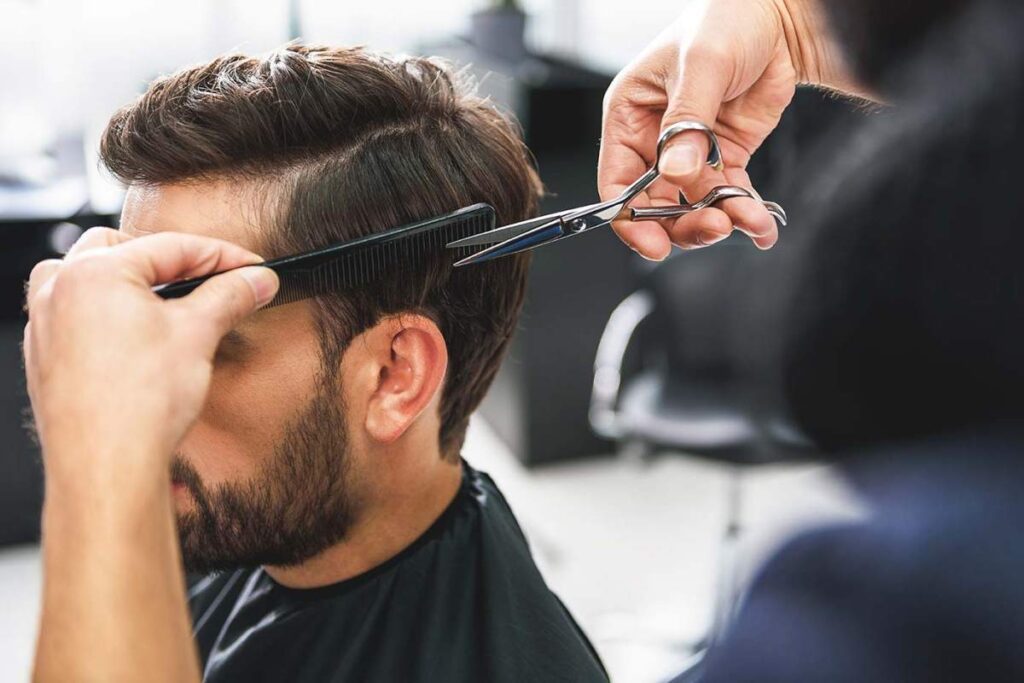
Bangs can change the shape and balance of a haircut more than almost any other detail. The right style depends on more than face shape: hair texture, growth patterns, forehead height, styling habits, glasses, and the seasonal conditions common in Worcester all affect how bangs behave.
What are the main types of bangs?
The most common bang styles include blunt, curtain, side-swept, wispy, bottleneck, micro, curly, and textured bangs. Each creates a different visual effect and requires a different level of daily maintenance.
- Blunt bangs are cut in a strong, mostly straight line. They create a defined frame around the eyes and can make thick hair appear especially full.
- Curtain bangs part near the center and sweep outward. They are usually shorter near the middle and longer toward the cheekbones.
- Side-swept bangs move across the forehead in one direction. They can be soft and blended or more structured.
- Wispy bangs use lighter ends and less density. They provide a fringe effect without creating a heavy line.
- Bottleneck bangs combine a shorter center with longer, angled sides. They are fuller than traditional curtain bangs but softer than blunt fringe.
- Micro bangs sit noticeably above the eyebrows. Their shorter length creates a strong, fashion-forward appearance.
- Curly or coily bangs are shaped according to the hair’s natural pattern rather than being pulled straight.
- Textured bangs are cut with movement and separation, making them suitable for layered or tousled hairstyles.
The name of a bang style describes its shape, but the final result also depends on density, length, layering, and how the hair naturally falls.
Which bangs suit different face shapes?
Face shape can help guide the choice, but it should not be treated as a strict rule. Personal style and hair behavior matter just as much.
Oval faces can often accommodate many styles, including blunt, curtain, side-swept, and textured bangs. The main consideration is proportion. Very long or very heavy fringe may visually shorten the face.
Round faces often pair well with curtain or side-swept bangs that create vertical movement. Longer pieces around the cheekbones can add definition without emphasizing width across the forehead.
Long or rectangular faces may benefit from fuller bangs that create a horizontal line. Blunt, bottleneck, and soft rounded bangs can help make the face appear more balanced.
Square faces often suit airy, curved, or side-swept styles. Softer edges can complement a stronger jawline, while heavily geometric bangs create a more dramatic effect.
Heart-shaped faces may work well with curtain bangs or side-swept fringe that adds visual fullness around the lower forehead and cheekbones. Extremely heavy bangs can make the upper face appear wider.
Diamond-shaped faces can be balanced with wispy, curtain, or side-swept bangs that soften the forehead and draw attention toward the eyes.
These guidelines are starting points rather than fixed formulas. A good bang shape can be adapted to nearly any face shape by changing the width, length, and density.
What bangs work best for straight, wavy, curly, or coily hair?
Hair texture affects both the appearance and upkeep of bangs. A style that looks effortless on straight hair may require more shaping on waves or curls.
Straight hair shows lines clearly, so blunt and micro bangs can look precise. Wispy or textured ends are useful if a softer appearance is preferred. Straight hair may also reveal uneven growth patterns more easily.
Wavy hair often suits curtain, bottleneck, and piecey bangs. The natural bend can create movement, although humidity may increase volume or cause the fringe to separate.
Curly hair can look especially balanced with rounded, curly, or layered bangs. Curly fringe should generally be shaped with the natural curl pattern in mind because it may appear significantly shorter when dry.
Coily hair can support sculpted, rounded, or separated fringe. Shrinkage, density, and curl direction should be considered before deciding on length. A bang that seems long while wet may sit much higher once fully dry.
For textured hair, the intended result should be discussed in terms of how the hair is normally worn. Bangs cut for stretched hair may not behave the same way when worn naturally.
Are curtain bangs easier to maintain than blunt bangs?
Curtain bangs are often more forgiving than blunt bangs because their longer, angled shape blends into the rest of the haircut. They can usually be parted, swept aside, or pinned back as they grow.
Blunt bangs demand more consistency. Small changes in length are visible, and the ends may need regular reshaping to maintain a clean line. Cowlicks, oily roots, or changing humidity can also make them more noticeable.
Curtain bangs still require styling, especially if the hair does not naturally part near the center. A small amount of directed blow-drying may be needed to encourage the pieces to curve away from the face.
For someone new to bangs, longer curtain or bottleneck styles can offer a gradual introduction. They provide a fringe effect without committing immediately to a dense, short line.
How do cowlicks and hair growth patterns affect bangs?
Cowlicks are among the most overlooked factors in bang selection. A strong swirl near the hairline can cause bangs to split, lift, or bend in a direction that differs from the desired style.
A cowlick does not automatically rule out bangs. It may influence the best shape:
- Side-swept bangs can work with a directional growth pattern.
- Curtain bangs may use a natural center or off-center part.
- Heavier bangs can sometimes provide enough weight to control mild lifting.
- Wispy fringe may be less predictable if the roots separate strongly.
- Very short bangs can exaggerate a cowlick because there is less length to provide weight.
The hairline is easiest to assess when the hair is dry and worn in its usual part. This gives a more accurate picture than examining freshly washed or heavily styled hair.
How should bangs be adjusted for glasses and everyday routines?
Glasses can affect where bangs sit, especially around the temples and outer corners of the eyes. Longer curtain or side-swept pieces may brush against frames, while very dense fringe can compete visually with larger lenses.
People who wear glasses frequently may prefer:
- Soft, separated fringe that does not fall heavily onto the frames
- Longer side pieces that can move around the temples
- A lighter center section for better visibility
- Bangs that can be tucked or redirected without losing their shape
Daily routine matters as well. Anyone who exercises often, wears hats, commutes outdoors, or prefers air-drying may find highly precise bangs more demanding. A textured or longer style generally offers more flexibility between washes and styling sessions.
How does Worcester weather affect bang maintenance?
Seasonal changes in Worcester can influence bangs throughout the year. Humidity may encourage waves, frizz, or separation, while dry winter air can create static and make fine fringe cling to the forehead. Hats, scarves, and heated indoor air can also flatten or redirect the hair.
Practical adjustments include:
- Keeping a small comb available for reshaping the fringe
- Drying the roots in the intended direction before the rest of the hair
- Avoiding excessive product near the forehead, where buildup can make bangs look oily
- Using lighter styling products for fine hair and more control for dense or highly textured hair
- Allowing curly or wavy bangs to dry in their natural pattern when possible
A style that remains attractive with slight movement is often easier to live with than one that depends on perfect smoothness.
How often do bangs need trimming?
The answer depends on the style and the desired length. Blunt and micro bangs usually show growth quickly, while curtain and longer side-swept bangs can grow out more gradually.
Many people notice a change in short fringe within a few weeks. Longer styles may remain wearable for considerably longer because they can be parted or blended into the haircut. Trimming frequency also depends on whether the bangs are meant to sit above the eyebrows, at eyebrow level, or near the cheekbones.
At-home trimming can be risky because small errors are highly visible, especially with blunt fringe. Cutting bangs while wet can also lead to an unexpectedly short result after the hair dries or curls.
What is the safest way to choose a first bang style?
Start with the least restrictive shape that matches the desired look. Longer curtain, bottleneck, or side-swept bangs usually provide more options than micro or heavy blunt fringe.
Before choosing, consider:
- How much styling is realistic on an ordinary morning
- Whether the hair is usually worn straight, wavy, curly, or coily
- Any cowlicks or uneven growth at the hairline
- Whether glasses, hats, or regular outdoor activity affect the front of the hair
- How comfortable it would be to grow the bangs out later
Bangs are not a permanent decision, but growing them out requires patience. Choosing a shape that works with natural texture and everyday habits usually produces a more satisfying result than selecting a style based only on a photograph.